A lot of build-to-rent investors are told to stay near the median price point in their market.
The thinking is understandable. Build too high, and the rent may not support it. Build too low, and you may lose quality, tenant appeal, or future value.
But "build near the median" is not really a strategy. It is a starting point.
For a long-term rental, I care less about where the house sits relative to the average sale price and more about whether the property works as a rental from day one. Can it be built at a sensible all-in cost? Can it rent at a number the market has actually proven? Does it have enough room for vacancy, repairs, taxes, insurance, and financing? Does it still give the owner a viable refinance or resale option later?
Those are the questions that matter.
Start with what the house really costs
The construction number is rarely the full investment.
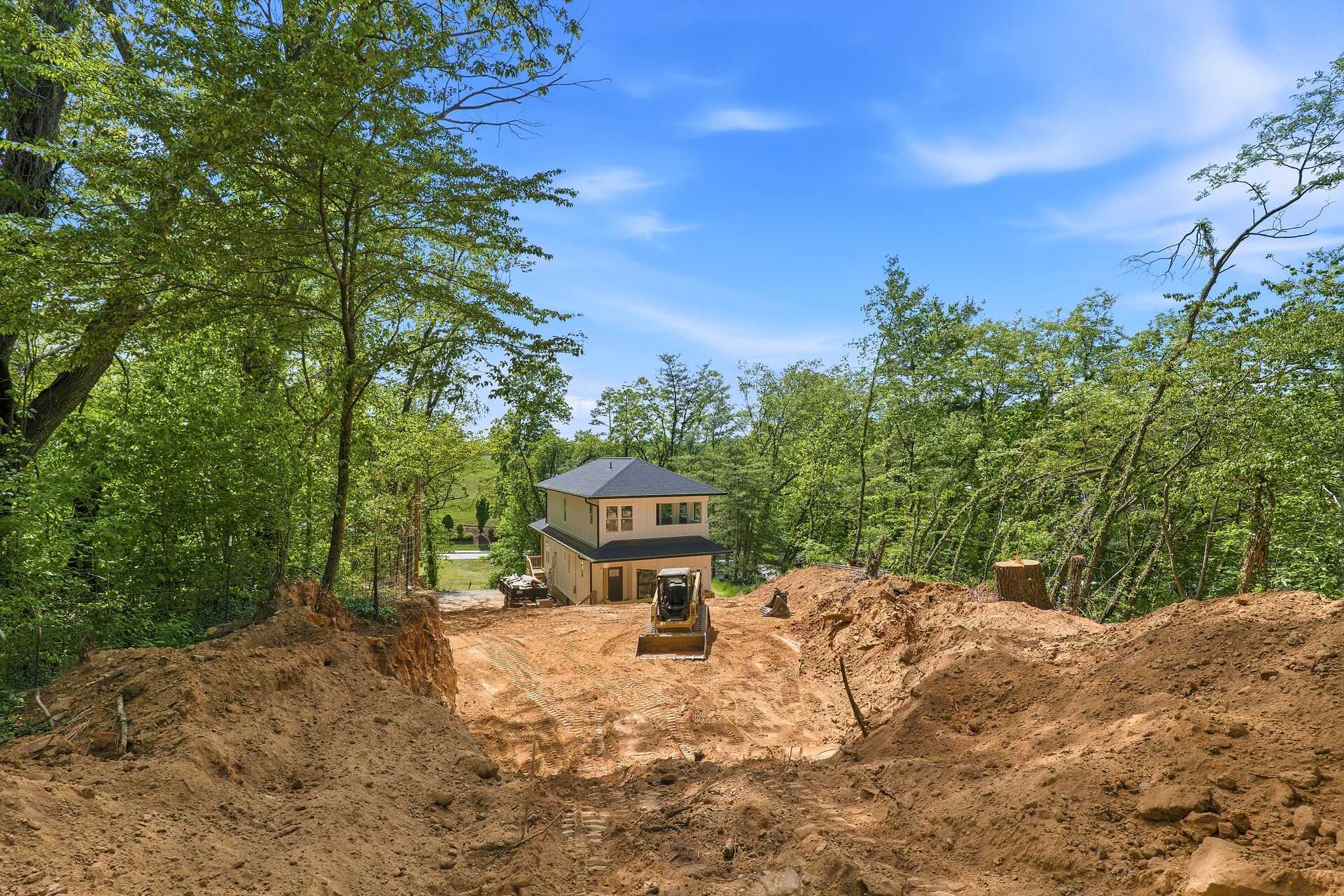
Land, grading, utilities, driveways, engineering, permits, interest, insurance, holding costs, contingency, and closing costs all belong in the same conversation. In Western North Carolina especially, the site can change the deal fast. A house that looks efficient on a basic construction estimate can become a very different investment once you account for road access, retaining, drainage, utilities, or difficult topography.
That full number is what the rental has to support.
Rent is the first test
For a build-to-rent project, the tenant is the first customer.
The question is not, "What is the highest rent I can find listed online?" The question is, "What will a qualified tenant actually pay for this house without it sitting for months or requiring concessions?"
That means looking at similar homes, not just any rental in the area. Bedroom count, parking, privacy, layout, condition, storage, outdoor space, and location all matter.
Building near the median can be fine, but it is not automatically safe
There is nothing wrong with building near the middle of the market. It can give you more rental comparables, a broader tenant pool, and a cleaner resale exit.
The problem comes when "median" becomes the reason for the decision. A median-priced house can still be a bad rental if the cost to create it is too high relative to the rent. A project that only works at top-of-market rent and full occupancy is not conservative. It is just tight.
There are times when building above the median makes sense
A higher-end rental can work when it gives people something they are having trouble finding in the market — a newer home with a real yard, dedicated parking, better storage, privacy, a functional three-bedroom layout, or a location that is difficult to replace.
But the extra cost has to earn its way into the project. Spending an additional $75,000 on the house is not justified because it looks nicer. It has to improve the outcome in a meaningful way.
Building below the median can be the best play
Below the median does not have to mean cheap. Sometimes the best rental is a smaller, simpler house in a location where people already want to live.
The key is keeping the things tenants notice and cutting the things they do not pay for. Tenants care about whether the house lives well. They care about bedrooms, bathrooms, parking, light, storage, privacy, outdoor space, condition, and location. They do not necessarily care whether the roofline is complicated, whether the footprint has extra corners, or whether the house has expensive architectural details that do not change their day-to-day experience.
That is where efficient design matters.
A simpler footprint, cleaner roofline, better layout, and fewer unnecessary structural moves can lower cost without making the house feel cheap. In the right neighborhood, that can create a much stronger rental basis than trying to build the biggest or most elaborate house the site will allow.
The target is not the lowest construction cost. It is the best value created per dollar spent.
Underwrite the part where things go wrong
I want a build-to-rent project to survive normal friction.
What happens if rent lands 10% below the target? What if the home takes two months to lease? What if insurance jumps? What if the appraisal comes in lighter than expected? What if rates stay high longer than anyone hoped?
Those are not worst-case fantasy scenarios. They are normal possibilities.
A deal does not need to print money under every situation. But it should not become a problem the moment the market is slightly less favorable than expected.
That is why the best build-to-rent projects usually look a little boring on paper. They are not built around perfect timing, perfect rents, or a future refinance that has to save the deal.
Resale still matters, but it is not why we build
A strong resale option is valuable. It gives the owner flexibility, supports the appraisal story, and provides an exit if the original plan changes.
But for a long-term rental, it should be a second layer of protection.
The first layer is still the tenant. Can this property lease consistently? Can it be operated without constant cash injections? Is it a home people will want to stay in?
If the answer is yes, then the appraisal and resale upside become much more meaningful.
The takeaway
The median price is useful context. It can tell you where the market has depth. It can help guide design, finishes, and future resale expectations.
It just should not make the decision for you.
A good build-to-rent deal is one where the house is built at a smart all-in cost, rents at a supportable number, holds up under conservative assumptions, and still gives the investor options later.
Sometimes that house will be near the median. Sometimes it will be above it. Sometimes the better opportunity is a smaller, more efficient home in a stronger location.
The number to chase is not the average sale price. It is the spread between what it costs to create the rental and what the market will reliably pay for it.