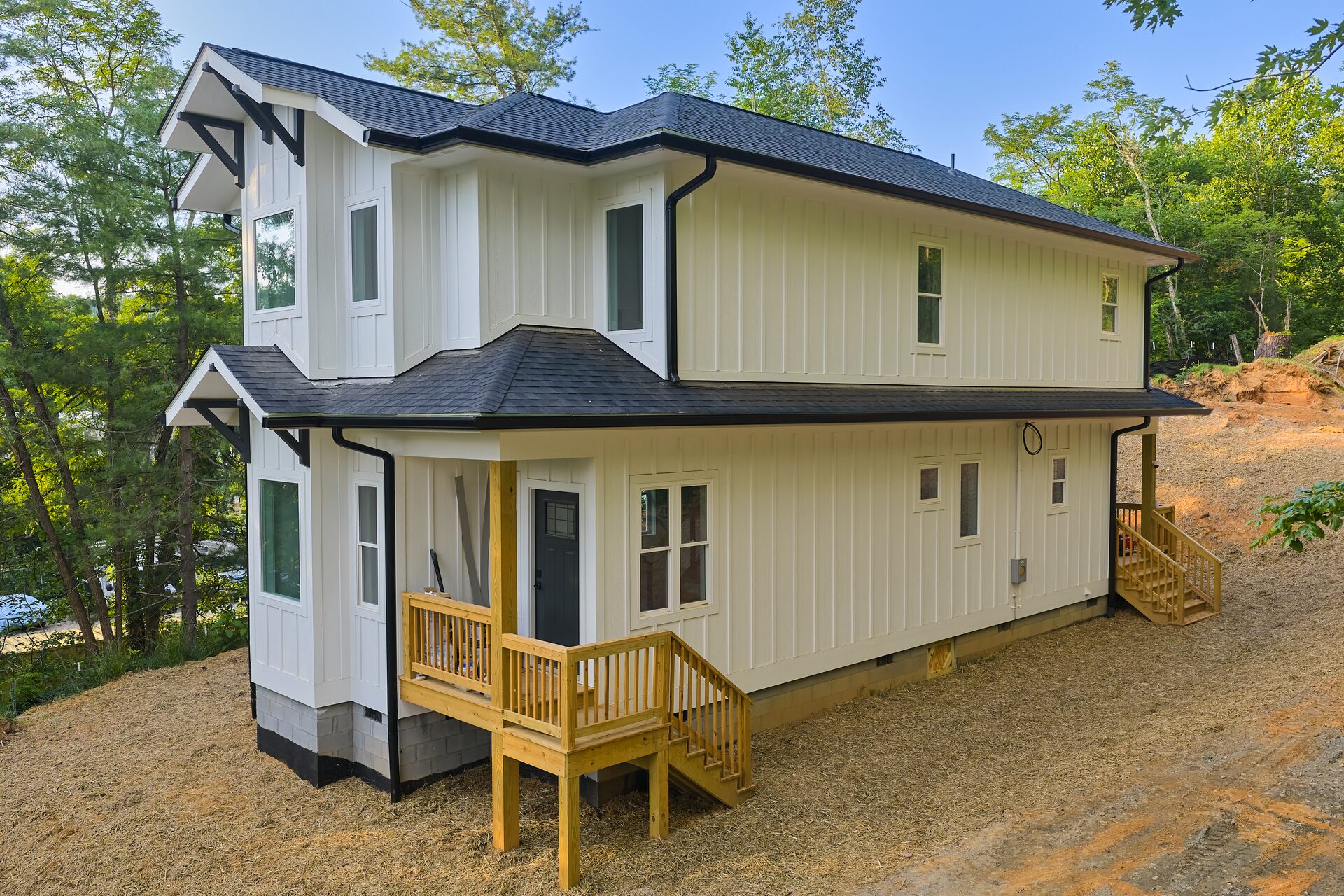
Two things stop people from seriously pursuing a new home build in Asheville before they ever talk to a builder. The first is assuming they need far more cash than they actually do. The second is assuming a traditional bank mortgage is the only financing option available to them.
Both assumptions are wrong, and both are worth clearing up before they cost someone a home they could have built.
Financing a new construction project in Asheville, Weaverville, Black Mountain, Candler, or Hendersonville is genuinely different from financing an existing home purchase. The loan products are different, the draw process is different, and the lenders who do this well are not always the ones people think to call first. Here is a clear picture of how it actually works.
You Probably Don't Need as Much Cash as You Think
The belief that building a custom home requires a massive cash outlay upfront keeps a lot of people from exploring the option at all. The reality is more nuanced.
Construction loans are designed to fund the build in stages as work progresses, not all at once. You are not writing a check for the entire project on day one. Depending on the loan product, the down payment requirement can range from as little as zero for qualifying USDA borrowers to ten to twenty percent for conventional construction financing. Strong financials, good credit, and a well-documented project can go a long way toward making the numbers work at a down payment level that surprises most people.
That does not mean there are no upfront costs. Land acquisition, design fees, site feasibility work, and closing costs all happen before construction begins and outside the construction loan itself. But the idea that building requires an amount of cash far beyond what most buyers have access to is often not accurate when the right financing path is found.
How Construction Loans Actually Work
A construction loan is a short-term financing product that funds the building of a home rather than the purchase of one. Instead of receiving the full loan amount at closing, the funds are released in draws at scheduled milestones as construction progresses. The lender typically sends an inspector to verify that the work has been completed before releasing each draw.
During construction you generally pay interest only on the funds that have been drawn, not the full loan amount. That keeps the carrying cost manageable while the home is being built. Once construction is complete and a certificate of occupancy is issued, the loan either converts to a permanent mortgage or you refinance into one depending on which product you used.
Lenders offering construction loans want to see a licensed and insured general contractor, approved plans, a realistic budget, and a borrower who qualifies financially. The builder's credentials matter as part of the approval process, which is worth knowing when you are choosing who to build with.
Construction-to-Permanent: The One-Time Close Option
The construction-to-permanent loan, often called a one-time close, is the most straightforward option for most people building a primary home. You go through one application, one approval, and one closing. The loan funds the build through the draw process and then automatically converts to a permanent mortgage when construction is complete.
The advantages are real. One set of closing costs instead of two. A locked interest rate from the start, which removes the uncertainty of where rates might be when you need to refinance at the end of construction. And a simpler overall process with one lender managing both phases of the financing.
The one-time close is widely available through regional banks, credit unions, and some national lenders. It works well for buyers who have their plans, their builder, and their lot lined up and are ready to move through the process in a structured way.
Two-Time Close Construction Loans
The two-time close option involves two separate transactions. A short-term construction loan covers the build, and when construction is complete you refinance that loan into a permanent mortgage as a separate closing.
This path costs more in closing fees since you go through two full closings. It also introduces rate risk because the rate on your permanent mortgage is not determined until the end of construction, when market conditions may have changed. On the other hand, the two-time close can offer more flexibility during the construction phase, and some borrowers prefer having the option to shop for the best permanent mortgage rate once the home is finished.
For most primary home buyers, the one-time close is the simpler path. The two-time close tends to make more sense for buyers with specific financing situations or investors who are not planning to keep the permanent mortgage long term.
Land Loans: If You're Buying the Lot First
Not every buyer purchases land and starts construction at the same time. Some people find the right lot before they are ready to build and want to secure it while they work through the design and planning process. A land loan makes that possible.
Land loans are shorter-term products with higher down payment requirements than traditional mortgages, typically twenty to thirty percent down, and higher interest rates that reflect the increased risk of lending on undeveloped property. The terms vary depending on whether the land has utilities, road access, and a clear path to being built on.
When the time comes to build, the land loan typically gets rolled into the construction loan, with the equity in the land counting toward the overall financing structure. Buying land separately and holding it can be a smart strategy when the right site becomes available before the build timeline is ready, but it is worth understanding the carrying costs of the land loan in the interim.
Credit Unions and Regional Banks: Often the Best Path in WNC
One of the most important things to know about construction financing in the Asheville area is that local and regional lenders often outperform national ones on this product. Credit unions and community banks in North Carolina frequently portfolio their own construction loans rather than selling them into the secondary market. That gives them more flexibility on approvals, draw schedules, and borrower situations that do not fit neatly into a national lender's underwriting box.
For buyers building in WNC, starting the conversation with a local credit union or community bank is often the right first call. They understand mountain lot construction, they know the market, and they are more likely to have a product that fits a project with site conditions or a timeline that a national lender would find complicated.
A local mortgage broker who specializes in construction lending in Western North Carolina can also be a valuable resource. They have relationships across multiple lenders and can identify the best fit for a specific borrower and project without the buyer having to shop lenders individually.
USDA Construction Loans: The Option Most People Don't Know About
The USDA Single Close Construction Loan is one of the most underused financing options available to buyers building in rural areas of North Carolina. It offers zero down payment for qualifying borrowers and properties, which makes it genuinely different from every other construction loan product on the market.
Parts of Madison County, Henderson County, and other areas surrounding Asheville qualify for USDA rural designation. Buyers building in those areas who meet the income and credit requirements may be eligible for a construction-to-permanent loan with no down payment required. Income limits apply and the property must be in a qualifying rural zone, but for buyers who fit the criteria it is worth understanding before assuming a down payment is unavoidable.
What Lenders Are Actually Looking For
Regardless of which financing path makes sense, lenders evaluating a construction loan application are looking at a consistent set of factors. Credit score and financial history, debt to income ratio, the size of the down payment relative to the total project cost, the qualifications of the general contractor, the completeness and accuracy of the project budget, and whether the plans have been finalized and the lot is under control.
The more complete and well-documented the project is before you apply, the smoother the process tends to go. Lenders are not trying to find reasons to say no. They are trying to understand the risk of the project and confirm that the borrower, the builder, and the plan all support a successful outcome.
Where to Start
If you are thinking about building a home in the Asheville area and want to understand what financing might look like for your specific situation, the best first step is a conversation with a local lender or mortgage broker who has experience with construction lending in WNC. They can give you a realistic picture of what you qualify for and which products fit your project before you get deep into the planning process.
At Wooded Mountain Builders we work with clients across Asheville, Weaverville, Black Mountain, Candler, and Hendersonville at every stage of the process, including the early conversations about what building actually takes. If you want to talk through your project and what the path forward might look like, reach out at woodedmountainbuilders.com/contact or call (828) 618-4837.