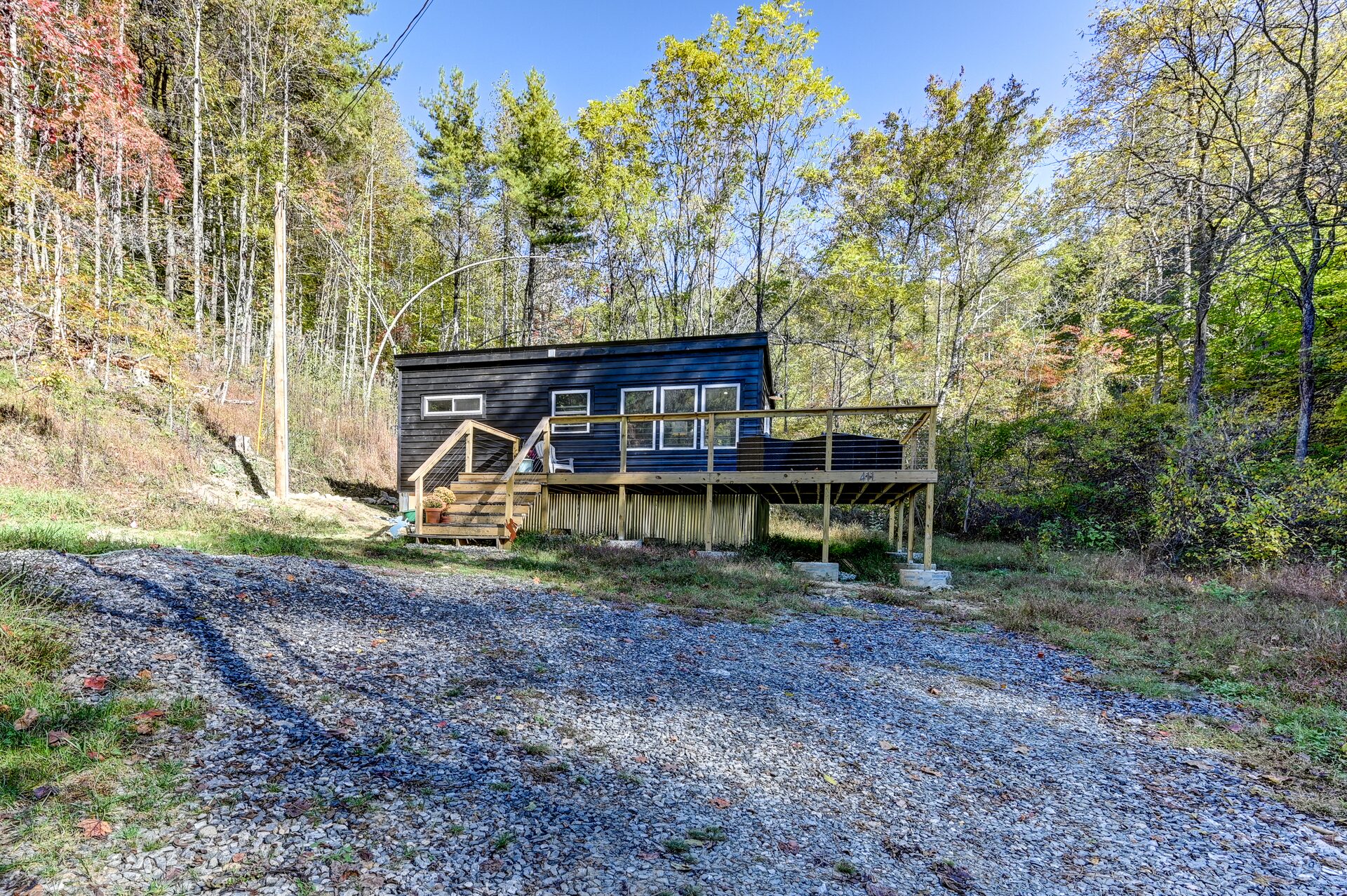
There's a good chance you've spent at least twenty minutes watching a YouTube video where a very enthusiastic couple tours their 280-square-foot dream home. Fold-down dining table. Loft bed accessible only by ladder. A composting toilet they seem unreasonably excited about. It looks charming. It looks affordable. It looks like freedom.
It also looks a lot simpler than it usually is, especially in Asheville, Weaverville, Black Mountain, Candler, and Hendersonville, where land, utilities, and building regulations add layers the YouTube couple conveniently skipped.
This post isn't meant to talk you out of anything. Tiny homes and ADUs are legitimate options for the right person in the right situation. But before you start sketching floor plans, it's worth understanding what you're actually buying into.
Let's Define the Terms First
A tiny home is generally defined as a residential dwelling under 400 square feet. That's the broad definition. In practice it can mean anything from a 150-square-foot cabin on wheels to a carefully designed 380-square-foot permanent structure with real finishes and real systems.
An ADU, or Accessory Dwelling Unit, is a separate living space built on the same property as a primary home. It can be detached, like a small cottage or studio in the backyard, or attached, like a converted garage apartment or an addition with its own entrance. ADUs are not always tiny, but they're often smaller than a traditional home and are almost always subject to their own set of rules.
The two terms get used interchangeably online, which creates a lot of confusion. They are not the same thing, and they don't always follow the same regulations.
The NC Foundation Reality
Here's where the Instagram version of tiny home life runs into North Carolina law. If you want to use a tiny home as a permanent residence in Buncombe County, which covers Asheville, it must be built on a permanent foundation and comply with the North Carolina State Building Code. Tiny homes on wheels are classified as recreational vehicles in most NC counties, which means you can stay in one temporarily, but you cannot legally live in it full-time on a residential lot.
In Buncombe County specifically, travel trailers and park models are not permitted as permanent residences, even if they're sitting on blocks. A 180-day occupancy limit applies. After that, you're out of compliance.
That changes the economics considerably. A tiny home on wheels that costs $60,000 from a manufacturer is a very different project than a code-compliant permanent structure on a foundation in Asheville. The permanent version involves site prep, foundation work, permits, inspections, and utility connections, none of which come with the sticker price.
The Real Cost Picture
Tiny homes and ADUs are almost always more expensive per square foot than a conventional home. That's not a knock on them. It's just math. You're still installing a full kitchen, a full bathroom, electrical panels, HVAC, plumbing, insulation, and roofing. You're just doing it in less space, which doesn't reduce the cost of those systems proportionally.
If your property in Asheville, Candler, or Hendersonville isn't already connected to public water and sewer, those costs go on top of everything else. A well can run anywhere from $8,000 to $20,000 or more depending on depth and site conditions. A septic system in Buncombe or Henderson County, once you factor in the soil evaluation, design, permits, and installation, can add another $15,000 to $30,000 or more. Electric service connection and potentially gas are separate line items on top of that.
Land grading, driveway access, and site preparation on a mountain lot add costs that flat-land estimates never account for. A sloped lot in Candler or a ridge property outside Hendersonville is not the same build as a level parcel in a subdivision.
None of this is hidden. It's just not included in the number that gets featured in the headline.
ADUs Have Their Own Cost Drivers
An ADU on an existing property sidesteps some of the land and utility issues since the primary home is already connected to services. But adding a separate dwelling unit often means upgrading the existing electrical service, adding a separate meter, and potentially upsizing the septic system to handle additional load.
In Asheville and surrounding communities, ADU permitting has become more streamlined in recent years, but zoning still determines what's allowed on a given parcel. Setbacks, lot coverage limits, and owner-occupancy requirements vary by jurisdiction and are worth confirming before you finalize any plans.
So Who Are Tiny Homes and ADUs Actually Right For?
Honestly, they're a lifestyle choice more than a financial strategy. If you're drawn to smaller living, simpler maintenance, a lower footprint, or the flexibility of a guest cottage or rental unit on your property, those are real and legitimate reasons to build one.
But if the primary motivation is that a tiny home seems cheaper than a regular house, it's worth running the actual numbers for your specific property before that assumption drives the decision. The per-square-foot cost of a well-built tiny home or ADU in the Asheville area is often higher than a comparable conventional home, not lower.
The upside isn't always the price. Sometimes it's the flexibility, the use of existing land, the rental income potential, or simply building something that fits the way you actually want to live.
If you're weighing whether a tiny home or ADU makes sense on your property in Asheville, Black Mountain, Weaverville, Candler, or Hendersonville, we're happy to walk through the site conditions and realistic costs with you.
Discuss Your Tiny Home or ADU