The walk-in shower versus tub debate comes up in almost every primary bathroom remodel we do in Asheville, Black Mountain, Weaverville, and Hendersonville. It sounds like a simple decision until you start thinking about resale, space, budget, and how you actually use your bathroom day to day.
Here is an honest take on how to think through it, without the generic advice that tells every homeowner the same thing regardless of their situation.
Most People Already Know What They Want
In our experience, most homeowners walking into a bathroom remodel already have a strong preference by the time the conversation starts. People who love a long soak at the end of the day are not going to be talked out of a tub. People who have not used the tub in their current bathroom in three years are not going to start using one after a remodel.
The decision gets complicated when resale enters the picture, or when there is a space constraint that forces a real trade-off. That is where it helps to think clearly about what each option actually gives you and what you give up.
The Case for the Walk-In Shower
A well-designed walk-in shower is one of the most satisfying upgrades in a primary bathroom remodel. The space feels open, the daily experience improves immediately, and there is a wide range of ways to design one depending on your budget and what you want the room to feel like.
Custom tile work, a frameless glass enclosure, a bench, a rain head, good lighting, and proper waterproofing behind everything make a walk-in shower something people genuinely look forward to using. At the mid-range, you are getting a functional and attractive shower that holds up well. At the higher end, you are getting something closer to a spa experience with materials and details that feel genuinely custom.
Walk-in showers also tend to make a bathroom feel larger than it is, particularly when a bulky tub has been removed and the space is redesigned around the shower as the primary feature.
The Case for Keeping a Tub
The main argument for keeping a tub is not that most people use it every week. It is that some people need it, and removing it entirely limits who can comfortably buy your home later.
Anyone with young children, or planning to have them, is going to want a tub somewhere in the house. Bathing a small child in a walk-in shower is not practical, and buyers in that stage of life know it. If your home has only one bathroom, or if every bathroom goes tub-free after a remodel, you have narrowed the buyer pool in a real way.
Does removing a tub hurt your resale value in the Asheville market? In our experience, not directly. Buyers are not going to subtract a fixed dollar amount because there is no tub in the primary bath. But it does eliminate a category of buyer before they even schedule a showing, and in a market that has cooled toward balance, limiting your pool is worth thinking about before you make a permanent decision.
The Best Answer: Separate Both If You Have the Space
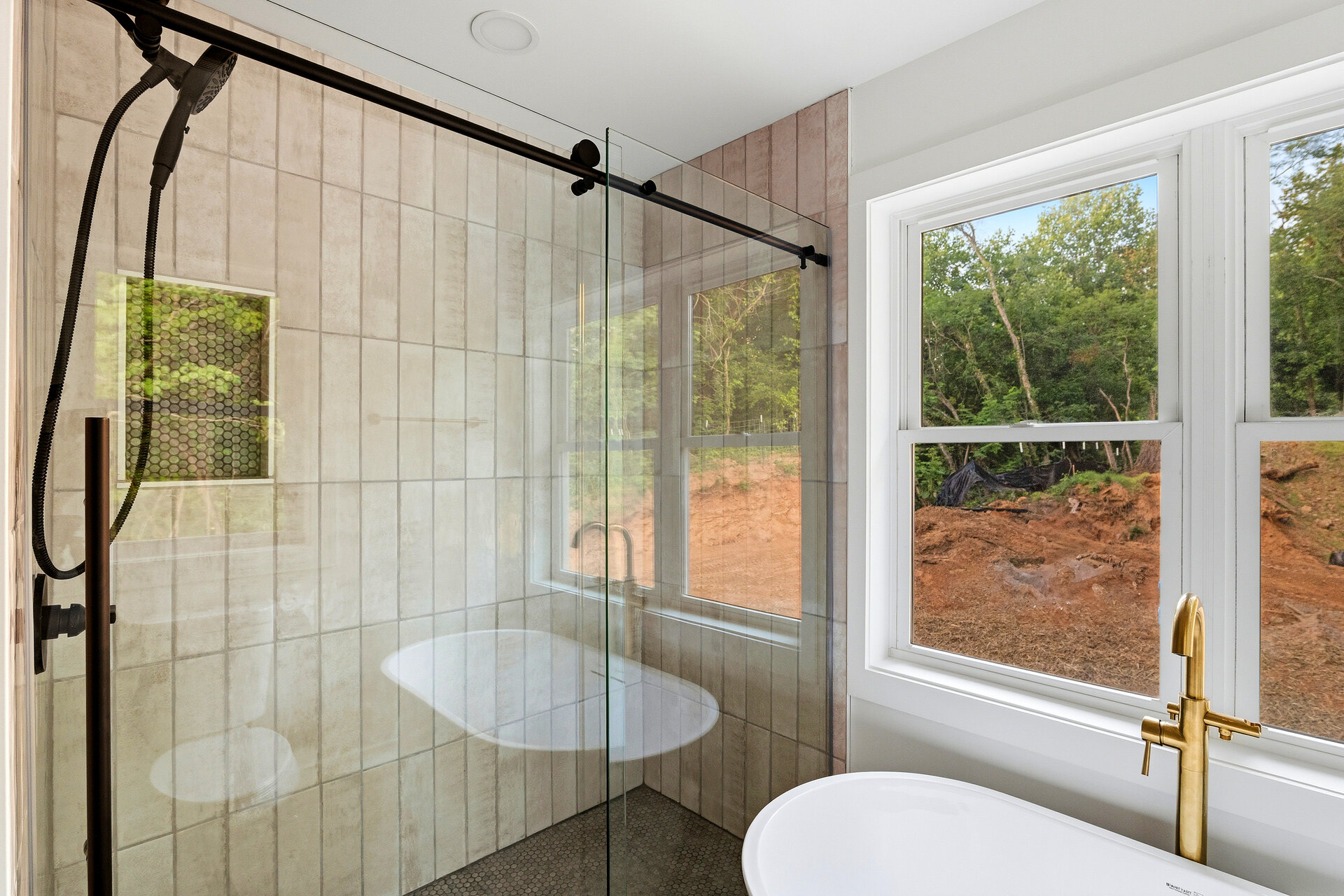
If the primary bathroom has enough square footage to accommodate a walk-in shower and a freestanding soaking tub as separate fixtures, that tends to be the most satisfying outcome for the homeowner and the most flexible outcome for resale.
A freestanding soaking tub as a design element alongside a generous walk-in shower gives the room a primary suite feel that photographs well, lives well, and appeals to a wide range of buyers if the home ever goes back on the market. It also means you are not forcing yourself to choose between the two experiences.
This combination can be done at a surprisingly reasonable cost when the scope is straightforward and the space cooperates. It becomes a higher-ticket item when the layout requires significant plumbing relocation, when the tub is a more elaborate freestanding piece, or when the design is pushing toward a full spa-level finish. Both are achievable. The budget just needs to reflect which one you are actually going after.
What This Does to Your Buyer Pool
Keeping at least one tub somewhere in the house is a reasonable rule of thumb regardless of what happens in the primary bathroom. If there is a second bathroom with a tub, the primary can go shower-only without meaningfully limiting your buyer pool. If the primary is the only full bathroom in the home, removing the tub entirely is a decision worth thinking through carefully before committing to it.
In the Asheville area, the buyer pool for mid-range homes includes a mix of young families, couples, remote workers, retirees, and second-home buyers. That range means there is no universal answer, but it does mean that a home with zero tubs will not appeal to a meaningful segment of buyers regardless of how well everything else is done.
What It Actually Costs to Do Both
A walk-in shower and a freestanding soaking tub in the same primary bathroom remodel do not have to be a luxury-only decision. When the space is right and the plumbing does not need to move dramatically, the cost of adding a soaking tub to a shower remodel is often less than homeowners expect.
Where costs climb is when the layout requires significant plumbing relocation, when a larger freestanding tub needs its own dedicated fill fixture, or when the overall finish level of the room is pushing into premium tile, custom glass, and high-end fixtures throughout. That version of the project is a higher investment, but it is also a genuinely different product. The more approachable version, a solid walk-in shower and a well-chosen freestanding tub in a space that accommodates both, is within reach for more homeowners than the spa-level version might suggest.
How to Decide for Your Specific Situation
Start with how you actually use your bathroom now. If the tub in your current bathroom sits unused, a walk-in shower-only remodel will serve you better day to day. If you use a tub regularly or have children who do, keeping one matters.
Then look at the space. A primary bathroom that can genuinely accommodate both without either feeling cramped is worth doing that way. A bathroom that cannot do both well is better off doing one thing right than two things poorly.
Finally, think about what other bathrooms in the house offer. If there is a tub somewhere else, the primary can go shower-only without consequence. If the primary is the only full bath, keeping a tub in some form is worth the planning.
If you are working through a primary bathroom remodel in Asheville, Weaverville, Black Mountain, Candler, or Hendersonville and want to talk through what makes sense for your specific space and budget, reach out at woodedmountainbuilders.com/contact or call (828) 618-4837.