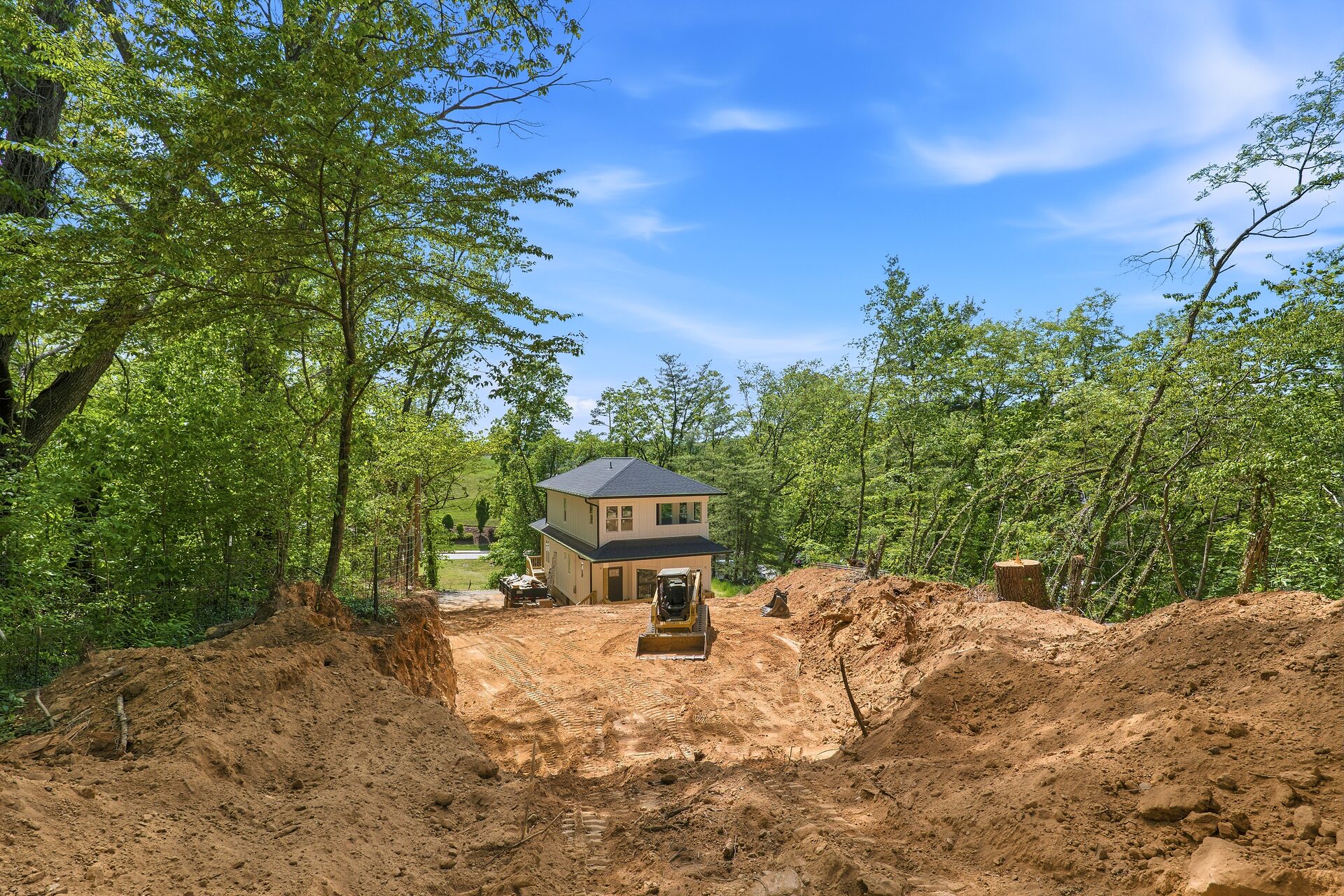
People buy land in the mountains outside Asheville, Weaverville, Candler, and Hendersonville every week with a clear picture in their head of where the house is going to sit. They've walked the property. They've stood on the high point and looked at the view. They've paced off the general footprint. And then they call a builder and find out that the spot they had in mind is not quite where the house is going to go, and that getting any house on that lot is going to cost considerably more than they planned.
This is not a rare situation. It happens often enough that it deserves a direct conversation before the purchase, not after.
Buildable Is Not a Yes or No Question
When buyers ask whether a piece of land is buildable, they're usually looking for a simple answer. The honest answer is almost never simple. Most lots in the Asheville area can be built on. The real question is what it will cost to do it, and whether that cost fits inside the budget the buyer is working with.
A lot that requires $30,000 in site work to prepare for construction is buildable. So is a lot that requires $150,000 in site work. Both are technically buildable. Only one of them is buildable within the budget most people have in mind when they're standing on the ridge taking photos.
The difference between those two numbers lives in the details of the land itself, and those details are almost never visible from a casual walk-through.
The First Things We Look At
When we evaluate a lot for a client in the Asheville area, we're working through a specific set of questions before we talk about anything else.
Topography and slope come first. A steep lot requires more grading, more retaining, and more engineering than a gentle one. The steeper the slope, the more the site work budget needs to reflect that reality before a house budget means anything.
Septic and perc feasibility matter enormously on lots without access to public sewer. A lot that won't pass a perc test cannot support a conventional septic system. That doesn't always mean it's unworkable, but it does mean the solution gets more expensive and more complicated. A soil evaluation needs to happen before you close on any lot that isn't connected to municipal sewer, not after.
Water and utility access are next. Is there public water at the street or does the lot need a well? How far is the nearest power connection and what does it cost to bring it to the building site? These numbers belong in the budget before the floor plan conversation starts.
Legal road access and easements are worth confirming in writing. A lot that looks accessible from a gravel road may not have a recorded easement giving you the legal right to use that road. That's a title and survey question that needs an answer before closing.
Setbacks and actual buildable area are where things get interesting. Every parcel has setback requirements from property lines, roads, streams, and sometimes neighboring structures. Flood zones and stream buffers can eliminate significant portions of a lot from consideration. What looks like a generous parcel on paper can turn out to have a surprisingly small area where a structure can legally sit.
Drainage, rock and soil conditions, retaining wall requirements, HOA and deed restrictions, nearby future development, construction access for equipment and materials, all of it factors into what a lot actually costs to build on versus what it costs to buy.
If you're trying to understand whether a specific lot makes sense for your project, our Land Feasibility service is designed exactly for that conversation.
The Surprise Nobody Sees Coming
Of everything on that list, the one that catches people off guard most consistently is the actual buildable area and where on the lot it is.
Buyers fall in love with a view, a particular tree, a spot on the property that feels right. They imagine the house there. Then the survey comes back, the setbacks get mapped, the slope gets evaluated, and the cleanest path to a buildable pad is somewhere else entirely. Not where they pictured it. Not where the view is best from ground level. The place where the house actually wants to go is determined by the land, not by the buyer standing in their favorite spot.
That's not a bad thing. A good builder and a good site plan can work with what the land offers and find something better than what the buyer originally imagined. But it requires flexibility going in and a willingness to let the site inform the design rather than forcing a design onto a site that doesn't want it.
Site Work Costs Come Before the House
This is the budget conversation that should happen before any lot purchase in the Asheville area and almost never does.
Site work is every dollar spent on the land before the house starts. Clearing and grubbing. Grading. Rock excavation if you hit it. Cut and fill to create a level building pad. The driveway, which on a mountain lot can be a significant line item on its own. Retaining walls if the grade requires them. The well if there's no public water. The septic system design, permitting, and installation if there's no public sewer. Utility connections from the road to the building site.
None of those costs show up in the purchase price of the land. All of them belong in the budget before the first conversation about square footage and finishes.
A lot that seems like a deal at $80,000 can require $120,000 in site work before a foundation is poured. That math changes the project entirely. The buyers who understand it going in make better decisions. The ones who find out after closing are the ones who end up with a house that costs more than they planned or land they can't afford to build on.
What to Do Before You Close on a Lot
Walk it with a builder before you buy it. Not after. Not once you're already under contract and emotionally committed. Before.
A builder who has worked on mountain lots in Candler, Weaverville, Black Mountain, and Hendersonville can tell you more in an hour on the ground than any listing description will ever reveal. We're looking at slope, access, drainage, where the septic area wants to go, where the building pad makes sense, and whether the budget the buyer is working with is realistic for what the land actually requires.
That conversation costs nothing and can save an enormous amount of money and regret.
You can learn more about how we work with landowners on our Build on Your Land page, or reach out directly at woodedmountainbuilders.com/contact or call (828) 618-4837. We're happy to take a look.