Most investors vet a builder on price and past work. Fewer ask how the money actually moves once the project starts, who tracks it, and how often they will hear what is happening on site. Those answers tell you more about a builder than a bid does, because a deal that looks good on paper can still go sideways if the operations behind it are loose.
This is how I run investor projects in Asheville, Weaverville, Black Mountain, Candler, and Hendersonville, and what I think any investor should expect from the person building their asset.
The Budget Gets Settled Before the Build Starts
It starts at the beginning. Before a project is approved, the numbers have to pencil out. If they do not, the right move is to walk away, not to hope the build fixes it.
That means the land basis, the site work, the construction cost, the carrying costs, and the exit all get run before anyone commits capital. I covered how I think about that side in our post on how to evaluate a spec home deal in the Asheville market. The point here is that budget tracking during construction only works if the budget was real to begin with. A builder who tracks a number that was never realistic is just documenting a problem.
Where the Biggest Unknowns Live
On the projects I have run, the biggest unknowns come from site costs and horizontal development.
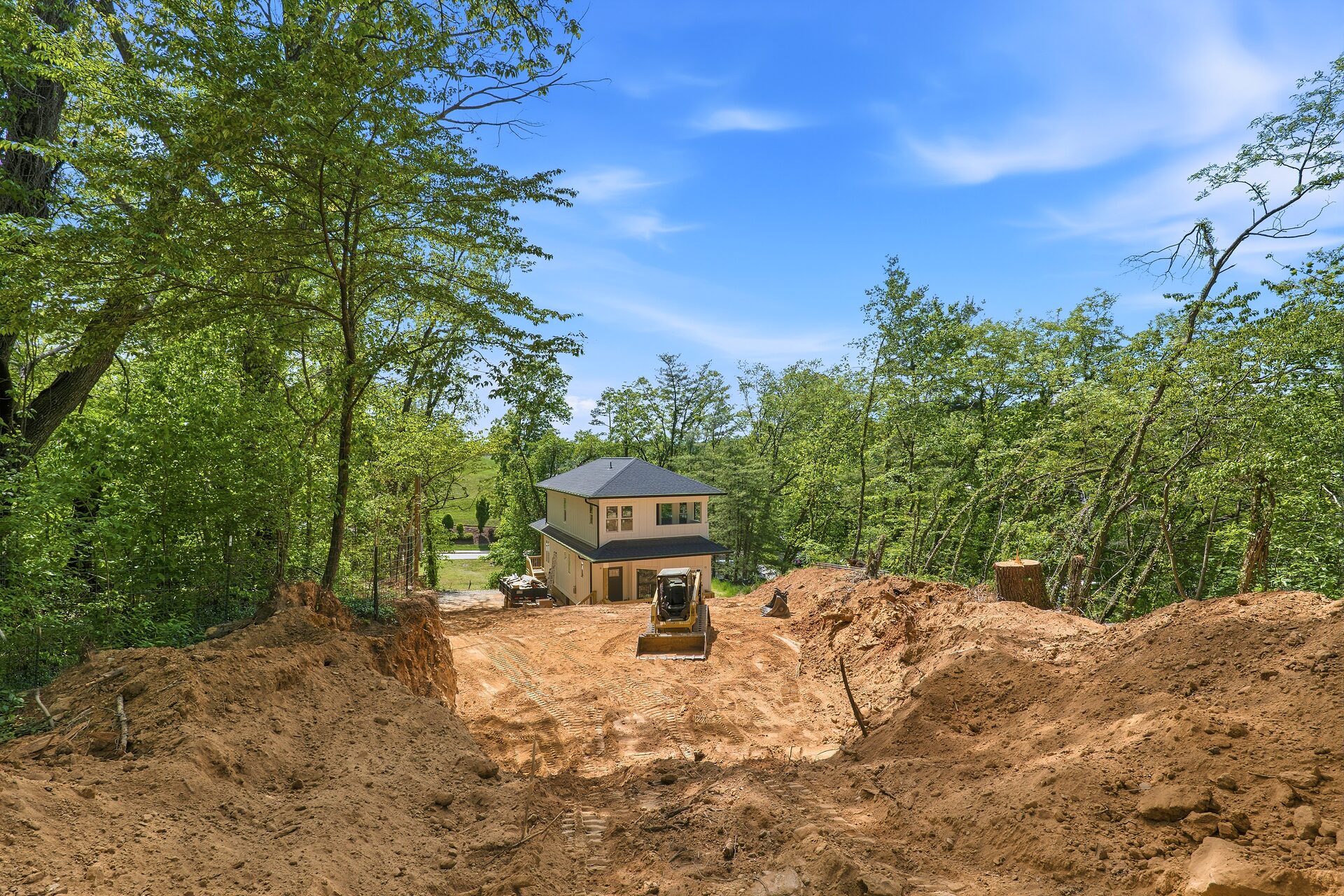
Horizontal development is the work that happens on the ground before a house goes up: grading, roads, utilities, drainage, and getting lots ready to build on. It is where the least is visible at the start and where conditions can change once the equipment is moving. Rock, drainage, access, and utility runs on a mountain site are hard to price with certainty from a walk-through.
That does not mean those projects should be avoided. It means they are where an investor needs the most cushion and the most communication. Our post on what buildable land actually means goes deeper on the site questions that drive cost.
How Draws Work
Draws are how construction funds are released over the life of a project, and the structure can differ from one deal to the next. Who is funding, what the lender or partner requires, and how the project is phased all shape it.
In general, I tie draws to the major phases of construction. Money moves when a meaningful piece of work is complete, not on an arbitrary date. That keeps the investor’s capital matched to progress on site, and it keeps both sides clear about what each draw is paying for.
Whatever structure a deal uses, it should be written down before the first draw, with the milestones defined clearly enough that nobody has to argue about whether a phase is finished.
What a Weekly Progress Report Should Do
Investors on my projects receive a progress report every week. Weekly is frequent enough that nothing drifts for long and infrequent enough to be worth reading.
A good report should let an investor know where the project stands without having to chase anyone. In my view, that means what got done, what is coming next, and anything that has changed or is starting to look like a risk. The last part matters most. An investor can handle news. What they cannot handle is finding out late.
Regular reporting also builds the habit that matters when something does go wrong. If an investor has heard from you every week, a hard conversation about a cost change is one more update. If they have heard nothing for a month, it is a crisis.
Underwrite for the Unexpected
Something unexpected will come up on a project. It might be a site condition, a cost that moves, or a delay on a material or a trade. You cannot remove that uncertainty from construction, so the real question is whether the deal was built to absorb it.
We have intentionally invested in properties with title and entitlement problems. Those properties are bought at a discount because most buyers do not want to touch them, and solving the problem is where the opportunity is. It only works if the risk is priced before the money goes in.
Here is a real example. We once bought a property that had both title and entitlement problems. One of them was that it had no utility easements. That is the kind of issue that scares most buyers off, and it is why the price was where it was. Before we bought it, we had a backup plan, which was to drill a well if we had to. That cost went into the underwriting from the start.
In the end, we did have to drill the well. Because it was already in the numbers, the deal still penciled out. There was no scramble to find money and no hard conversation with a partner about a problem nobody had planned for.
The lesson is not about wells. The unknown was already in the underwriting and there was a plan for it, so what could have been a bad surprise was a cost we had already accounted for.
That is what conservative underwriting looks like in practice. Carry a cushion for the parts of the project that are hardest to price, have a backup plan for the problems you can see coming, and communicate clearly enough that the people funding the deal are never the last to know.
Questions to Ask Any Builder Before You Fund a Project
Before you commit capital to any builder, get clear answers to these:
How do you decide a deal is worth doing before construction starts?
How are draws structured, and what defines each milestone?
How often will I receive updates, and what will they include?
How do you handle a cost change or a site surprise, and when will I hear about it?
What backup plan do you have for the problems you already know about?
A builder who runs a tight operation will answer those without hesitation. Vague answers are information too.
If you are an investor looking at a project in the Asheville area and want to talk through how a build would be run from the first number to the last draw, reach out at woodedmountainbuilders.com/contact or call (828) 618-4837.